Satyam Samaj Seva Samiti
Known by his deeds. So, our deeds should help society.
Known by his deeds. So, our deeds should help society.
 Health & Education are State level programmes from Satyam Samaj Seva Samiti which focuses on basic
education for children and youth and their health because education is the right of each child.
Satyam Samaj seva Samiti educational initiatives include Crèche [0-3 yrs], Pre-school [3-6 yrs], Non
Formal Education [6-14 yrs non-school going],Remedial Education [6-14 yrs school going],Functional
Literacy [18-45 yrs women] and Family Life Education for adolescent girls.
Health & Education are State level programmes from Satyam Samaj Seva Samiti which focuses on basic
education for children and youth and their health because education is the right of each child.
Satyam Samaj seva Samiti educational initiatives include Crèche [0-3 yrs], Pre-school [3-6 yrs], Non
Formal Education [6-14 yrs non-school going],Remedial Education [6-14 yrs school going],Functional
Literacy [18-45 yrs women] and Family Life Education for adolescent girls.
Satyam Samaj Seva Samiti works with under-privileged children under difficult circumstances such as child labour, children of poorest of the parents, children inflicted and affected with HIV/AIDS, street and runaway children, children with rare disability [Autism, Deaf & Dumb, Blind, and Spastic etc.], disaster struck children and slum children etc..Children are the future of a nation. For an emerging and developing country like India, development of underprivileged children holds the key to the progress of the nation itself. Education for underprivileged Children is the key whether we are addressing healthcare, poverty, population control, unemployment or human rights issues. These projects support more than 100 grassroots initiatives working for the education of very poor and underprivileged children in Uttar Pradesh.
Health Camps:
 These are small duration camps organized in Uttar Pradesh on the basis of health needs of a specific location. These health camps aim at promoting health seeking behaviour in the long term and thus, unlike a general curative health camp, these camps also majorly work on building awareness regarding common ailments, family planning methods, nutrition and hygiene and sanitation. These camps provide comprehensive health services free of any cost. These
health camps are organized with support from corporates, civic bodies, government, NGOs & individual volunteers.
These are small duration camps organized in Uttar Pradesh on the basis of health needs of a specific location. These health camps aim at promoting health seeking behaviour in the long term and thus, unlike a general curative health camp, these camps also majorly work on building awareness regarding common ailments, family planning methods, nutrition and hygiene and sanitation. These camps provide comprehensive health services free of any cost. These
health camps are organized with support from corporates, civic bodies, government, NGOs & individual volunteers.
 The purpose of the survey was to gain a sense of how the community of non-governmental organizations that until
recently focused on multilateral development bank reform is responding to the rise of private investment flows to
developing and transition economies. Survey participants were interviewed on a not-for-attribution basis, and were asked to
comment on the opportunities and challenges facing their own organizations, as well as the broader NGO
community. In particular, participants were asked about the appropriate allocation of NGO resources to private sector issues;
gaps in capacity or knowledge related to private sector issues; potential allies in addressing this agenda; and
plans for future program development. A listing of the organizations surveyed is included.Even after decades of
freedom, India is struggling to provide basic health services to its people. According to government sources, in India 45
children die every hour due to respiratory infections. 1 child dies every 2 minutes due to diarrhoea. And annually,
about 2 million children under 5 years of age die due to preventable diseases. The situation calls for timely care and
diagnosis which can reduce the incidence of morbidity and mortality especially among children and women.
The purpose of the survey was to gain a sense of how the community of non-governmental organizations that until
recently focused on multilateral development bank reform is responding to the rise of private investment flows to
developing and transition economies. Survey participants were interviewed on a not-for-attribution basis, and were asked to
comment on the opportunities and challenges facing their own organizations, as well as the broader NGO
community. In particular, participants were asked about the appropriate allocation of NGO resources to private sector issues;
gaps in capacity or knowledge related to private sector issues; potential allies in addressing this agenda; and
plans for future program development. A listing of the organizations surveyed is included.Even after decades of
freedom, India is struggling to provide basic health services to its people. According to government sources, in India 45
children die every hour due to respiratory infections. 1 child dies every 2 minutes due to diarrhoea. And annually,
about 2 million children under 5 years of age die due to preventable diseases. The situation calls for timely care and
diagnosis which can reduce the incidence of morbidity and mortality especially among children and women.
Survey participants were asked to comment on whether NGO attention to the role of the private sector in sustainable development was currently overweighted, underweighted, or appropriate to the significance of the issue. Responses were a mix between “underweighted” and “appropriate,” with several respondents remarking that the community is currently in a period of flux. Several participants expressed concern that the new focus on the private sector should not come at the expense of continued engagement with the multilateral development banks:
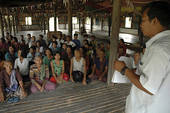 Satyam Samaj Seva Samiti organized the sportsand health camps for the development of the body and mind of the
childrens This NGO organized some sport:
Satyam Samaj Seva Samiti organized the sportsand health camps for the development of the body and mind of the
childrens This NGO organized some sport:
Aims & Objectives
Seminars, Workshops And Conferences:
The Training-Seminar-Workshop-Consultation Brochure 2012-2013 presents in a nutshell some of the programmes envisaged by the Satyam Samaj Seva Samiti for this year. These programmes have been planned in keeping with the emerging issues and national scenario in focus. The main objective of these programmes is to provide opportunity in terms of capacity building, leadership formation and creating critical consciousness, especially among those engaged in rural reconstruction, development in favour of the excluded and the marginalised. These programmes are intended to create leadership among people in the urban as well as rural areas, so that they can guide and lead those millions who have no voice, or whose voice is not heard in their attempt to attain justice and freedom. Some of the programmes are directly focussing on imparting basic legal knowledge so that the marginalised section of people could be empowered to defend their rights.
.jpg) Satyam samaj Seva Samiti provides the guidelines and organize some Training institution for the Training &
Devolopment.
Satyam samaj Seva Samiti provides the guidelines and organize some Training institution for the Training &
Devolopment.
Satyam Samaj seva samiti give training to the Micro, Small and Medium Business Development.Our NGO gives training to the ladies who want to be financialy independent by handcraft and suport them to improve their talent. SSSS developed the training manual to build further the knowledge base on product delivery of Micro, Small and Medium Energy Entrepreneurs in Uttar pradesh. The manual was developed as part of a larger programme to enhance the linkages between energy entrepreneurs, consumers and financial institutions in Uttar Pradesh.
.jpg) he training manual is developed as a modular guide to enable energy entrepreneurs to acquire supplementary
knowledge in order to expand their energy businesses. It provides guidelines on business delivery models, business and financial management, and the sources of business finance. It is expected that this training manual will assist energy
entrepreneurs to be favorably positioned for linkages that would be suited to various sources of finance.
he training manual is developed as a modular guide to enable energy entrepreneurs to acquire supplementary
knowledge in order to expand their energy businesses. It provides guidelines on business delivery models, business and financial management, and the sources of business finance. It is expected that this training manual will assist energy
entrepreneurs to be favorably positioned for linkages that would be suited to various sources of finance.